Effective Major Depressive Disorder Treatment is designed to reduce persistent sadness, low energy, negative thinking patterns, and functional impairment caused by clinical depression. Major Depressive Disorder (MDD) is more than occasional sadness—it is a medical condition involving changes in brain chemistry, neural pathways, and stress regulation systems. With structured treatment, many individuals experience significant symptom reduction and improved quality of life.
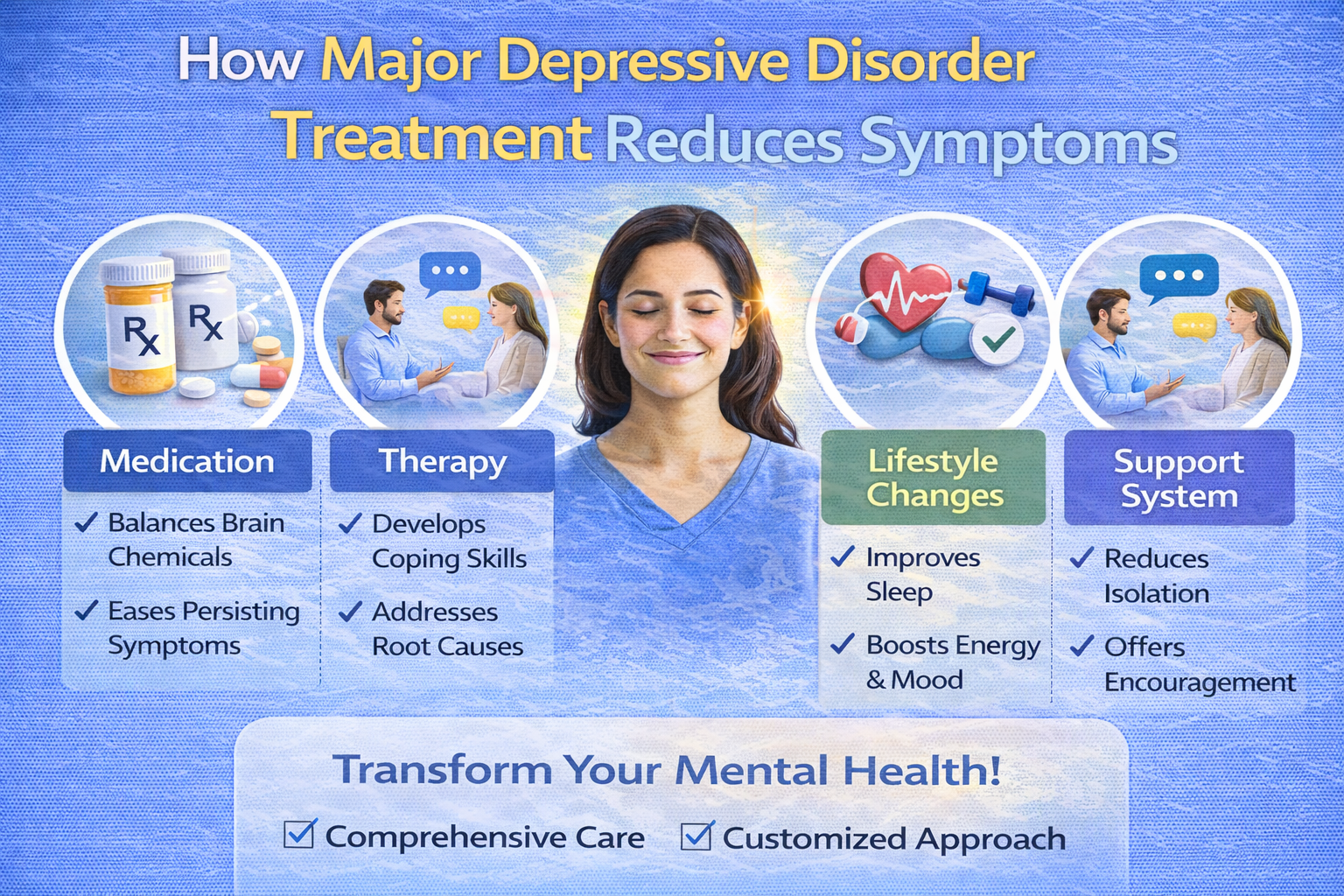
Understanding how treatment works can provide reassurance and encourage individuals to seek consistent care.
Understanding Major Depressive Disorder
Major Depressive Disorder is characterized by symptoms lasting at least two weeks and interfering with daily functioning. Common symptoms include:
- Persistent low mood
- Loss of interest in activities
- Fatigue or low energy
- Changes in appetite or sleep
- Feelings of guilt or worthlessness
- Difficulty concentrating
- Thoughts of death or suicide
MDD affects brain regions responsible for mood regulation, motivation, and emotional processing. Treatment aims to rebalance these systems and restore stability.
How Medication Reduces Symptoms
1. Restoring Neurotransmitter Balance
Antidepressant medications primarily target neurotransmitters such as serotonin, norepinephrine, and dopamine. These chemicals regulate mood, focus, and motivation.
Selective Serotonin Reuptake Inhibitors (SSRIs) increase serotonin availability in the brain. Serotonin-Norepinephrine Reuptake Inhibitors (SNRIs) enhance both serotonin and norepinephrine levels. By correcting chemical imbalances, these medications reduce sadness, irritability, and emotional numbness.
2. Improving Sleep and Energy
Many antidepressants gradually improve sleep quality and daytime energy. Better sleep strengthens emotional regulation and cognitive function, further reducing depressive symptoms.
3. Preventing Relapse
Long-term medication management reduces the likelihood of future depressive episodes, especially in individuals with recurrent depression.
How Therapy Supports Symptom Reduction
Medication addresses biological factors, while therapy addresses psychological and behavioral contributors.
Cognitive Behavioral Therapy (CBT)
CBT helps individuals:
- Identify distorted thinking patterns
- Challenge negative self-beliefs
- Replace harmful thoughts with balanced alternatives
- Develop healthier coping mechanisms
By changing thought patterns, emotional responses become less intense and more manageable.
Interpersonal Therapy (IPT)
IPT focuses on improving relationships, communication skills, and conflict resolution, which often influence depressive symptoms.
Behavioral Activation
Depression reduces motivation. Behavioral activation encourages small, meaningful activities that gradually restore interest and pleasure in daily life.
The Role of Lifestyle in Symptom Improvement
Lifestyle adjustments significantly enhance treatment effectiveness.
Regular Exercise
Physical activity increases endorphins and boosts neurotransmitter activity, naturally supporting mood improvement.
Balanced Nutrition
Proper nutrition supports brain health and energy regulation.
Consistent Sleep Schedule
Sleep stabilization improves emotional resilience and cognitive clarity.
Stress Management
Mindfulness, breathing exercises, and relaxation techniques reduce cortisol levels and prevent emotional overload.
Monitoring and Ongoing Care
Symptom reduction is not immediate. Most antidepressants require 4–6 weeks for noticeable improvement. Regular follow-ups allow providers to:
- Adjust medication dosages
- Monitor side effects
- Track symptom progress
- Identify early signs of relapse
Ongoing care ensures treatment remains effective and personalized.
Telehealth and Accessibility
Access to psychiatric care plays a critical role in successful symptom reduction. Telehealth services improve consistency by:
- Reducing transportation barriers
- Offering flexible scheduling
- Providing privacy and convenience
- Supporting regular check-ins
Consistent access leads to better adherence and long-term outcomes.
Addressing Treatment-Resistant Depression
In some cases, initial treatment may not fully relieve symptoms. Providers may consider:
- Adjusting medication type or dosage
- Combining medications
- Adding psychotherapy approaches
- Exploring advanced options such as TMS (Transcranial Magnetic Stimulation)
A personalized approach ensures that patients continue moving toward recovery.
Emotional and Cognitive Benefits of Treatment
As symptoms decrease, individuals often notice:
- Improved concentration
- Increased motivation
- Restored interest in hobbies
- Enhanced social engagement
- Better decision-making
- Reduced feelings of hopelessness
These improvements reinforce positive momentum and long-term stability.
Frequently Asked Questions
How long does treatment take to work?
Some improvement may appear within a few weeks, but full benefits often develop over several months.
Can depression return after treatment?
Yes, which is why maintenance therapy and follow-up care are important for relapse prevention.
Is therapy alone enough?
For mild cases, therapy may be sufficient. Moderate to severe depression often benefits from combined medication and therapy.
Is online treatment effective?
Yes. Structured online psychiatric services provide consistent monitoring and personalized care comparable to in-person treatment.
Why Early Treatment Matters
Untreated depression can worsen over time, increasing the risk of:
- Social withdrawal
- Substance misuse
- Physical health complications
- Suicidal thoughts
Early intervention improves prognosis and reduces long-term complications.
Final Thoughts
Major Depressive Disorder treatment reduces symptoms by targeting both biological and psychological factors. Through medication, therapy, structured routines, and consistent monitoring, individuals can regain emotional balance and daily functioning. Long-term support ensures continued progress and relapse prevention. For those seeking accessible, structured mental health care, working with Online Psychiatric in NM providers offers professional oversight, personalized treatment plans, and ongoing support to help reduce depressive symptoms and restore well-being.


